
Morocco is a place where history and culture blend beautifully. It has a food culture as rich as its past. From ancient Berber traditions to Arab and European influences, each era has left its mark. This mix has created a vibrant and diverse culture.
This article looks at how Morocco’s history has shaped its moroccan food culture, traditional moroccan dishes, moroccan cuisine history, and moroccan culinary traditions.
Key Takeaways
- Morocco’s cuisine is a melting pot of Berber, Arab, Andalusian, and Mediterranean culinary traditions.
- Staple dishes like couscous and tagine have Berber origins, showcasing the influence of the indigenous population.
- The 7th-century Arab invasion introduced a wealth of spices that now define the flavor profile of Moroccan cuisine.
- Moorish rule left its mark with the incorporation of sweet and savory combinations in Moroccan dishes.
- Moroccan cuisine reflects the country’s rich history and cultural diversity, making it a culinary destination of global renown.
The Moroccan Culinary Tapestry: Influences and Fusion
Moroccan cuisine is a melting pot of various culinary influences. It shows centuries of cross-cultural exchanges and trade routes. The mix of Berber, Arab, Andalusian, and Mediterranean traditions creates a unique blend of flavors. This blend shows Morocco’s rich history and cultural diversity.
The Berber people, Morocco’s indigenous inhabitants, play a big role in its cuisine. Their dishes like couscous and tagine are key to Moroccan food. Moroccan cuisine history also got a boost from Arab traditions. These brought spices like saffron, cinnamon, and cumin, changing Moroccan dishes’ flavors.
The Moors, who came from the Iberian Peninsula, added more to Moroccan cuisine. They brought sweet-and-savory mixes, like lamb with prunes or chicken with apricots. These unique tastes are now a big part of Moroccan food.
Over time, Moroccan food traditions have been shaped by Mediterranean, European, and Ottoman cuisines. The French colonial era introduced butter and a focus on pastries and desserts. The Ottoman Empire’s influence also added to Moroccan cuisine, making it more diverse.
« Moroccan cuisine is a symphony of flavors, a tapestry woven with the threads of countless cultural exchanges. »
Today, Moroccan cuisine shows how different cultures can come together. The flavors of Berber, Arab, Andalusian, and Mediterranean traditions blend to make a unique and exciting culinary experience.
The Berber Foundations
Morocco’s Berber people have been key to its culture for thousands of years. They’ve greatly influenced the nation’s berber cuisine and traditional moroccan dishes. The Berbers, or Amazigh, have deep ties to the land. Their cooking traditions have deeply shaped the moroccan culinary heritage.
At the core of Berber food are dishes like couscous and tagine. Couscous is a small pasta pellet that holds deep meaning in Moroccan culture. It’s often served with meats and vegetables, creating a mix of flavors and textures.
The tagine, a slow-cooked stew, is a key Berber dish. It’s made in a special pot and uses local ingredients and spices. This shows the Berbers’ strong bond with the earth and their skill in cooking.
« The Berbers have been the bedrock of Moroccan culture for millennia, leaving an indelible mark on the country’s culinary landscape. »
Beyond famous dishes, the Berber impact is seen in their use of organic ingredients and traditional farming. This focus on sustainability and authenticity keeps Moroccan cuisine true to its roots.
The Berber people are the heart of Moroccan culture. They’ve made sure that traditional moroccan dishes and berber cuisine stay alive and loved. Their influence has shaped the flavors and traditions that food lovers worldwide admire.
Arab Influence and the Introduction of Spices
Morocco’s food culture is rich and diverse, thanks to its history of cultural exchanges. The Arab invasion in the 7th century had a big impact on Moroccan food. It brought new ingredients and cooking methods that changed the taste of the region forever.
When Arab conquerors arrived, they brought aromatic spices that became key to Moroccan cooking. Spices like saffron, cinnamon, and cumin quickly became part of the local diet. These spices were rare before but now are essential in Moroccan kitchens. They add a unique flavor to many dishes.
The Arab influence went beyond just spices. It also brought new cooking techniques that mixed well with Berber traditions. This created a unique cuisine that amazed food lovers around the world.
Today, moroccan spices like saffron, cinnamon, and cumin are crucial to the country’s arab influence on moroccan cuisine. They are the base for many famous moroccan culinary history dishes. From the fragrant tagines to the fluffy couscous, the Arab influence is clear in every dish.
« The Arab invasion brought an unparalleled array of spices that forever altered the trajectory of Moroccan cuisine, elevating it to new heights of flavor and complexity. »
| Spice | Origin | Culinary Impact |
|---|---|---|
| Saffron | Middle East | Imparts a rich, golden hue and distinctive floral aroma to dishes like tagines and rice. |
| Cinnamon | Sri Lanka | Lends a warm, sweet flavor to both savory and sweet Moroccan specialties. |
| Cumin | Middle East | Adds an earthy, slightly nutty taste that is essential to many Moroccan spice blends and stews. |
The Moorish Impact
The Moors had a big impact on Moroccan food. They brought their own way of cooking that mixed with the local tastes. This mix led to unique flavors like lamb with prunes or chicken with apricots. These are now key parts of Moroccan dishes.
The Moors ruled parts of the Iberian Peninsula for nearly 900 years. They knew a lot about spices and flavors. They mixed these with the Berber and Arab cooking styles of Morocco. This created Moroccan flavors that are both complex and exciting.
The Moors also changed Moroccan cooking in other ways. They introduced new cooking methods and ingredients. These have become key to Moroccan food today. Ingredients like olive oil, fruits, and vegetables, and foods like pastries and bread, show the Moorish influence.
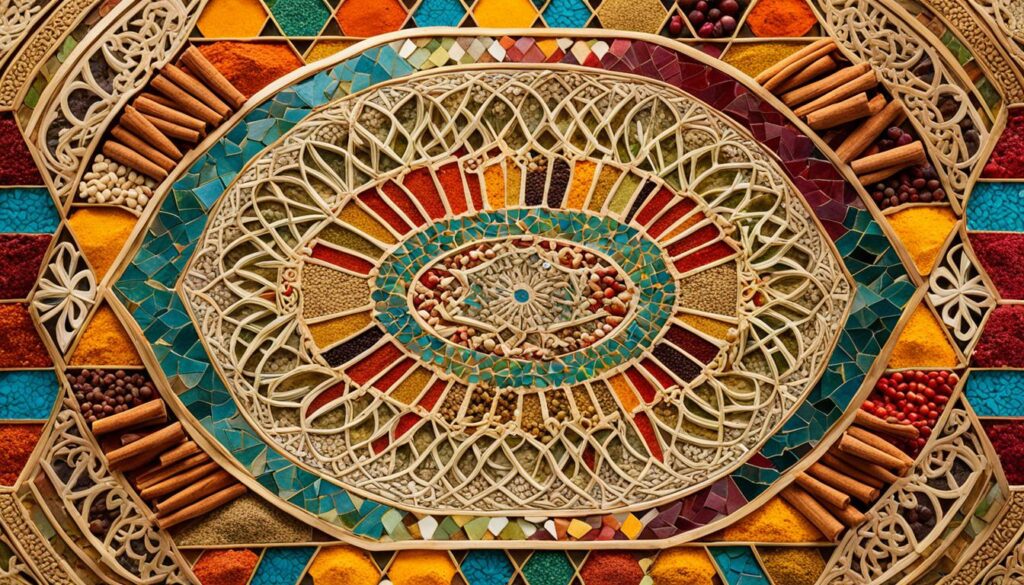
Today, you can still see the Moorish impact in Moroccan food. It’s a mix of Berber, Arab, and Moorish cooking styles. This mix has made Moroccan food unique and always changing. It offers a special way to experience Moroccan culture through food.
European Influences
Moroccan cuisine is a mix of many cultures, including European influences from colonization. The French and Spanish have greatly shaped Moroccan food. They added new flavors and cooking methods.
The French brought croissants and baguettes to Morocco in the early 1900s. They also introduced khobz, a traditional flatbread. French pastries added elegance to Moroccan sweets.
Spanish influence is seen in the use of olives and olive oil in Moroccan cooking. The Moors, who ruled parts of Spain, made these ingredients important in Moroccan food.
| European Influence | Impact on Moroccan Cuisine |
|---|---|
| French Colonization | Introduction of pastries, bread, and French-style cafes |
| Spanish Influence | Widespread use of olives and olive oil |
The european influence on moroccan cuisine and the french and spanish influence on moroccan food have changed Moroccan cooking. They created a mix of European and North African flavors. This mix is loved by food lovers all over the world.
« Moroccan cuisine is a symphony of flavors, with each cultural influence adding a unique harmony to the overall composition. »
Signature Dishes are a Feast for the Senses
Moroccan cuisine is famous for its amazing traditional dishes. Each one is a mix of flavors and textures. From the classic tagine to the loved couscous, these dishes take you on a taste adventure.
Tagine: The Slow-Cooked Delight
The tagine is a slow-cooked stew made in a special clay pot. It’s the symbol of Moroccan cooking. These dishes are full of tender meats, spices, and fruits and vegetables. You can find different types of tagine, like chicken, seafood, lamb with prunes, or vegetarian.
Couscous: Morocco’s National Treasure
Couscous is a fluffy grain dish that’s very important in Moroccan culture. It’s known as an Intangible Cultural Heritage of Humanity. It’s often served with meats and vegetables. The way it’s made, rolling the couscous by hand, is a tradition passed down through families.
Pastilla: The Exquisite Savory-Sweet Pastry
Pastilla is a special pastry that’s both savory and sweet. It’s a sign of Moroccan skill in mixing flavors and textures. This dish is made for big events and shows off Moroccan cooking skills.
« Moroccan cuisine is a feast for the senses, where traditional moroccan dishes come together in a harmonious blend of spices, textures, and cultural influences. »
From the slow-cooked tagine to the fluffy couscous and the delicate pastilla, these dishes show off Morocco’s cooking skills. They take you on a journey through the rich flavors of Moroccan food culture.
Spices are the Soul of moroccan food culture
Moroccan cuisine is known for its amazing use of spices. Ingredients like cumin, cinnamon, and ginger add depth and complexity to dishes. These spices make Moroccan food unique.
Ras El Hanout is a famous spice blend that can have up to a hundred spices. This shows the rich diversity of Moroccan cooking. In the spice markets, people can learn a lot from vendors about using these spices.
Buying spices in Morocco means getting them fresh for the best flavor. Essential spices include cumin, coriander, paprika, and more. These spices are used in small amounts but make a big difference in taste.
Cinnamon is used in both sweet and savory dishes in Morocco. Turmeric and saffron add color and a special touch to some dishes. They make Moroccan food look and taste luxurious.
Spices are key to Moroccan food, creating a mix of aromas and tastes. They take you on a journey through Moroccan cuisine. From breakfast to dinner, spices make every meal special.
« Moroccan cuisine is a symphony of spices, where each ingredient plays a vital role in creating a harmonious and unforgettable flavor profile. »
Traditions and Rituals: Sharing Meals and Mint Tea
Moroccan cuisine is more than just food. It’s a celebration of traditions and rituals around mealtimes. Sharing meals is key in Moroccan culture. Families and friends come together to enjoy flavors and company. This sharing is a big part of Moroccan dining customs and Moroccan hospitality.
Moroccan meals are made special with mint tea, a symbol of hospitality. This tea is served in beautiful teapots. Making mint tea is a ritual, with tea poured from high to create a frothy texture and aroma.
« Mint tea is a defining characteristic of Moroccan culture and is commonly enjoyed throughout the country. »
Moroccan mint tea started as a British import in the 18th century. It’s now a symbol of respect and friendship. Sharing mint tea is a sign of hospitality. Moroccans don’t clink glasses or say « cheers. » They raise their glasses, make eye contact, and enjoy the moment with their guests.
Mint tea is important all day, from breakfast to dessert. Preparing and serving it is a big part of Moroccan culinary traditions. Each region has its own way of making mint tea.
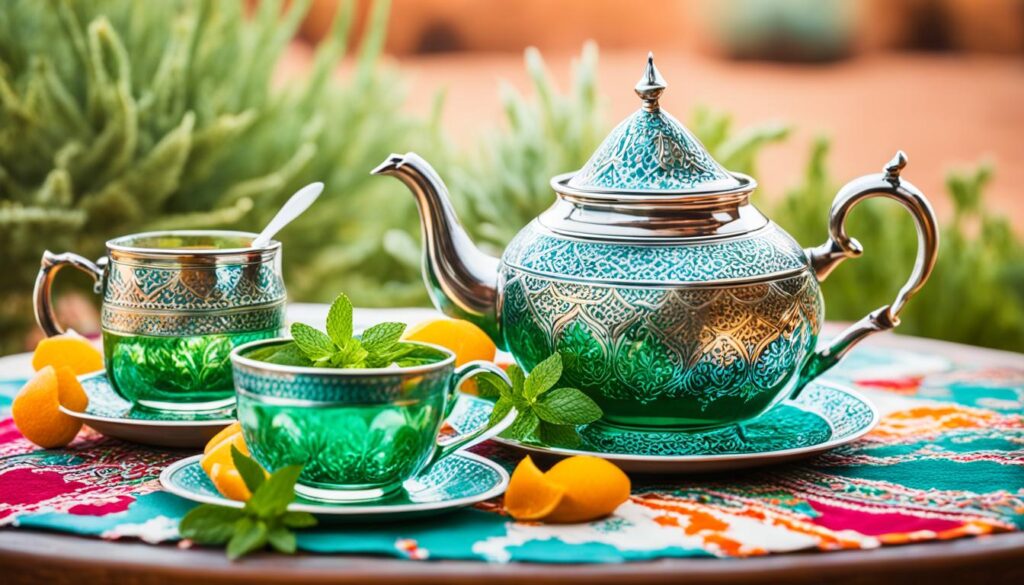
Whether it’s a casual meet-up or a big event, sharing meals and mint tea is key in Moroccan dining customs and Moroccan hospitality. These traditions nourish both body and spirit. They build a strong sense of community and connection among Moroccans.
Preserving Moroccan Culinary Heritage, From Farm to Table
Morocco’s moroccan culinary heritage is deeply linked to its farming traditions. Local farmers are key to keeping traditional crops and farming alive. This ensures Moroccan cuisine stays authentic and sustainable. The focus on moroccan sustainable agriculture and moroccan food sourcing connects the food to the land and its resources.
In 2013, UNESCO added Morocco to the list of Intangible Cultural Heritage of Humanity for its Mediterranean diet. This honor highlights the importance of Moroccan food in the country’s culture. In 2020, UNESCO also named Moroccan Couscous as part of the Intangible Cultural Heritage of Humanity. This further proves Morocco’s role as a leader in food culture.
Preserving Traditional Crops and Farming Methods
Moroccan farmers protect the country’s moroccan culinary heritage. They keep traditional crops and farming methods alive. These methods not only keep Moroccan flavors unique but also help the environment and support local economies.
- Traditional crops like durum wheat, olives, dates, and figs are grown with care, keeping Moroccan dishes authentic.
- Organic and regenerative farming are common, reducing synthetic fertilizers and pesticides.
- Heirloom seeds are saved, keeping the genetic diversity of Moroccan moroccan sustainable agriculture alive.
Locally Sourced Ingredients: The Heart of Moroccan Cuisine
Moroccan cuisine is known for its use of organic and local ingredients. This shows the strong bond between the land and the food. Chefs take pride in using fresh, seasonal produce and local products in their dishes.
| Ingredient | Significance in Moroccan Cuisine |
|---|---|
| Olive Oil | A key ingredient, providing healthy fats and a unique flavor. |
| Preserved Lemon and Olives | Add a salty and acidic taste to Moroccan dishes. |
| Saffron, Cumin, and Cinnamon | These spices add depth and complexity to many dishes. |
| Preserved Butter (Smen) | It gives a rich, nutty flavor to pastries and savory dishes. |
By focusing on moroccan sustainable agriculture and moroccan food sourcing, Moroccan cuisine thrives. It keeps its unique cultural heritage alive and delights food lovers around the world.
Experience the Vibrant Tapestry of Moroccan Cuisine
For food lovers looking to explore top North African flavors, Morocco is the perfect spot. Every meal here is a trip through history, culture, and amazing tastes. Join a Taste of Morocco Culinary Tour to explore the best of Moroccan food.
Morocco’s food is a mix of many flavors, thanks to Berber, Andalusian, Mediterranean, European, and African influences. You’ll find dishes full of spices like cumin, turmeric, cinnamon, saffron, nutmeg, paprika, ginger, and fenugreek. The tagine and couscous are famous dishes that show off Moroccan cooking.
Experience Morocco’s food culture by visiting markets and trying new dishes. From the busy streets of Fez to fancy restaurants in Marrakech, you’ll love every bite. This journey will change how you see Moroccan food forever.
« Moroccan cuisine is a delightful blend of influences from Berber, Andalusian, Mediterranean, European, and sub-Saharan flavors. »
Uncover the Secrets of Moroccan Culinary Traditions
Learn more about Moroccan food by visiting markets, taking cooking classes, and trying local dishes. From Marrakech’s spice markets to Fez’s khobz bakeries, you’ll dive deep into Moroccan food culture.
Learn how to make the perfect ras el hanout spice mix, which can have up to 40 ingredients. Discover the secrets of tagines and couscous. Don’t miss the pastilla, a sweet and savory pastry that’s a Moroccan specialty.
| Signature Moroccan Dishes | Defining Characteristics |
|---|---|
| Tagine | Slow-cooked stew in an earthenware pot, known for its ability to retain moisture and create flavorful dishes. |
| Couscous | A staple fluffy semolina grain dish often paired with succulent meats and vegetables, symbolizing Moroccan hospitality. |
| Pastilla | An exquisite savory-sweet pastry, a true Moroccan delicacy that showcases the country’s unique culinary heritage. |
| Harira | A Moroccan soup made with lentils and chickpeas, holding particular significance during the holy month of Ramadan. |
| Kefta Tagine | Celebrated Moroccan dish featuring spiced beef or lamb meatballs simmered in a zesty tomato sauce. |
Looking for a food adventure or just want to learn more about Moroccan flavors? A Taste of Morocco Culinary Tour is the perfect choice. It promises an unforgettable journey into Moroccan cuisine.
Moroccan Sweets: A Delightful Indulgence
Moroccan sweets are a true work of art. They are made with spices, fruits, and delicate textures. These treats are filled with the tastes of cinnamon, almonds, and fruits. They have won the hearts of dessert lovers all over the world.
Now, people all over the globe can enjoy these sweets thanks to gourmet shops and online stores. These shops bring a taste of Morocco to dessert lovers everywhere.
Cooking shows and online tutorials have made it easier to learn how to make these sweets. In Morocco, these sweets are a big part of celebrations like weddings and holidays. They are often made ahead of time for special events.
Seasonal Delights and Global Influence
The Moroccan calendar is full of seasonal sweets. Each season brings new spices to the table. These sweets are loved for their taste and beautiful looks.
Arab and Berber traditions have shaped Moroccan sweets. They use ingredients like almonds, pistachios, and dates. French influence added new techniques like puff pastry.
| Traditional Moroccan Sweets | Flavor Profiles | Cultural Significance |
|---|---|---|
| M’hanncha | Almond, cinnamon, honey | Served at weddings and celebrations |
| Chebakia | Sesame, honey, rose water | Enjoyed during Ramadan and Eid |
| Ghriba | Almond, orange blossom water | Traditional Berber cookies |
| Briouats | Almond, cinnamon, honey | Versatile pastry used in various sweets |
Making these pastries is an art that takes hours. Spices like cinnamon, saffron, and ginger add to their flavor. These sweets are a true delight for anyone who tries them.
« Moroccan sweets are a reflection of the country’s culture and heritage, with intricate designs and flavors that showcase craftsmanship and attention to detail. »
Explore the world of Moroccan sweets. Enjoy the mix of spices, fruits, and textures that make them special.
Regional Specialties: A Journey Through Flavors
Morocco’s diverse geography and cultural influences have created a rich variety of regional culinary specialties. From the fertile plains of the Souss region to the mountainous Atlas, each area has its own unique tastes. This shows the incredible moroccan culinary diversity.
In northern cities like Tangier and Tetouan, the Mediterranean’s influence is clear in seafood dishes like grilled sardines and fish tagines. Central regions like Fez and Meknes are famous for their moroccan local ingredients. They use spices like saffron and cinnamon in their moroccan regional cuisines.
The southern oases, like the Draa Valley and the Sahara desert, have a unique culinary heritage. This blends Berber, Arab, and Subsaharan African influences. You’ll find dishes like lamb with dates and the iconic mint tea, a key part of Moroccan hospitality.
Exploring Morocco’s diverse regions is like going on a sensory journey. Each bite tells a story of the land, the people, and the traditions that have shaped this cuisine. From Marrakech’s fragrant spice markets to Essaouira’s aromatic tagines, the moroccan regional cuisines offer a feast for the senses. They give a glimpse into Moroccan culture.
« Moroccan cuisine is a symphony of flavors, a melding of cultures and traditions that dance on the palate, transporting you to the heart of this enchanting land. »
Whether you’re enjoying savory pastillas from the Rif Mountains or sweet delicacies in Fez, the moroccan culinary diversity in these specialties shows the rich tapestry of Moroccan gastronomy. Trying these flavors is a way to connect with the soul of this captivating country.
Moroccan Culinary Tours: Immerse in the Flavors
For those eager to dive into Moroccan cuisine, Morocco is a treasure trove of culinary adventures. You can wander through bustling souks, learn to cook, or enjoy fine dining. Morocco is a unique place to explore the depth of its food culture. Join a Taste of Morocco Culinary Tour and let your senses explore this land of flavors.
This tour is a deep dive into Moroccan culinary tourism. It blends exploring Moroccan food culture with Moroccan cuisine experiences. You’ll have four cooking sessions with expert teachers who speak English and French. You’ll learn to make traditional dishes like tagine, couscous, and pastilla.
You’ll stay in riads and four-star hotels for 9 nights, with the chance to upgrade to five-star places. Every day, you’ll enjoy breakfast, 3 lunches, and 9 dinners. You’ll taste the best of Moroccan food as you visit places like Casablanca, Rabat, Meknes, Fes, Marrakech, and Essaouira. An excursion to a Berber village adds a cultural twist to your food journey.
| Inclusions | Details |
|---|---|
| Cooking Experiences | 4 Moroccan cooking classes with different chefs |
| Accommodations | 9 nights in riads and 4-star hotels, with 5-star upgrade options |
| Meals | Daily breakfast, 3 lunches, and 9 dinners |
| Destinations Visited | Casablanca, Rabat, Meknes, Volubilis, Fes, Marrakech, Essaouira, El Oualidia, and El Jadida |
| Tour Price | $6,750 US per person, based on double occupancy |
This Moroccan culinary tourism experience is a deep dive into the country’s vibrant flavors and culture. It focuses on hands-on learning, real culinary experiences, and meeting local artisans. This tour is a memorable journey for anyone who loves food and culture.
« Embarking on a Moroccan culinary adventure is like stepping into a world of spices, colors, and endless possibilities. It’s a journey that awakens the senses and leaves you with a deep appreciation for the diversity and complexity of Moroccan cuisine. »
Conclusion
Morocco’s food scene is a mix of many cultures and traditions. It shows the country’s rich history through its flavors. From Berber roots to Arab, Moorish, and European tastes, Moroccan food is a mix of many worlds.
Exploring Moroccan food takes you on a journey through its history. Each dish tells a story. It shows the beauty of Moroccan food culture and cuisine.
When you try the tagines, couscous, or pastries, you experience a feast for your senses. This food culture is shaped by centuries of sharing flavors and ideas. It opens a window into Morocco’s history and the spirit of its people.
On your journey through Morocco, let the food lead the way. Discover the magic of this land, where every meal has a story. Dive into the Moroccan culinary heritage and find the heart of this amazing country.