
The 1970s disco era was a time of bold fashion. It was all about bright colors, sparkles, and fun. This style was more than just clothes; it was a cultural movement. It showed the lively spirit of the time.
But why does disco fashion still excite us today? Let’s explore the 70’s disco fashion world. We’ll find out what makes it so timeless.
Key Takeaways
- Disco fashion embodied the spirit of the 1970s nightlife and music scene
- Bell-bottom pants and leisure suits became quintessential disco ensembles
- Disco hairstyles, like the iconic afro, and facial hair were a part of the era’s grooming trends
- Disco fashion icons like John Travolta and the Bee Gees blended musical and sartorial influence
- Disco fashion continues to inspire Halloween and themed party outfits to this day
Disco Fashion: A Cultural Phenomenon
The roots of disco fashion started in New York City’s underground clubs in the late 1960s. It took inspiration from late mod and hippie styles. But as disco clubs grew, fashion evolved into something unique. It focused on glamour, ease, and being able to dance.
The Roots of Disco Fashion
In the early 1970s, bell-bottoms, parkas, and batik shirts were big. They were linked to the hippie movement and protests against the Vietnam War. Women also started to embrace a glamor look, inspired by 1940s movie stars.
The swinging London of the 1960s saw a rise in dandies. They wore colorful suits and unique cuts for a slim look.
Disco’s Influence on Mainstream Culture
By the mid-1970s, disco had become a big deal. Fashion was as important as the music. Places like Studio 54 were the heart of disco fashion, where people wore their most outrageous outfits.
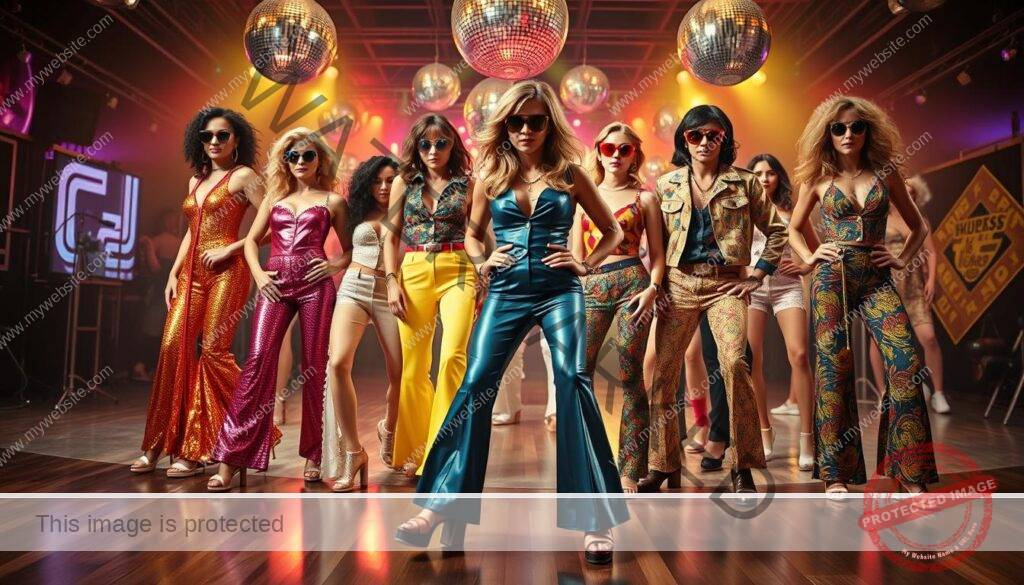
The film « Saturday Night Fever » in 1977 made disco mainstream. It starred John Travolta and showed disco’s impact on culture. Disco fashion was all about glitz, with sequins, platforms, and bell-bottoms being favorites.
Disco clubs were known for their lights, mirrors, and dance floors. They encouraged people to have fun and dance.
Even though disco faced backlash in the late 1970s, it still had a big impact. It influenced music, fashion, and culture, shaping genres like house and electronic music.
Key Elements of Disco Style
The 1970s disco era was all about bold fashion. Two key items were the satin shirt and the flared bell-bottom pants. These pieces were essential for the disco look.
Satin Shirts: Luxurious Sheen on the Dance Floor
The satin shirt was the ultimate disco fashion statement. It was all about glamour and energy. These shirts had wide collars that added to the overall look.
The shiny fabric sparkled under the dance floor lights. It made every move look amazing.
Bell-Bottom Pants: Flared Legs for Confident Moves
The bell-bottom pant was a must-have with the satin shirt. These pants were wide from the knee down. They showed off the era’s bold style.
They came in many fabrics and colors. You could find them in denim, bright polyester, and more. They often had cool prints or sparkles.
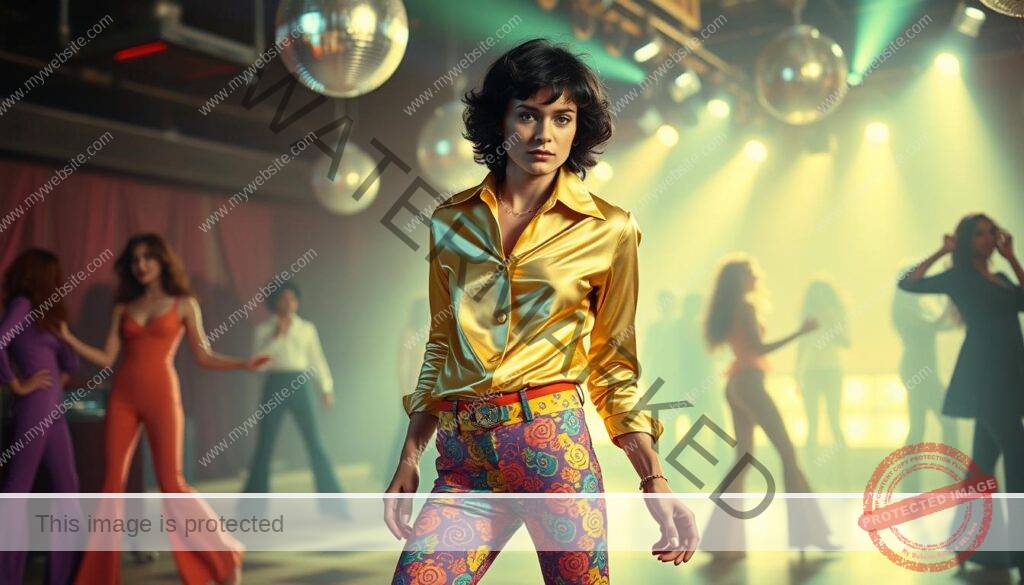
The satin shirt and bell-bottom pants were the disco uniform. They let dancers show off their moves with confidence. These items were more than just clothes; they were a way to express oneself and connect with others.
Leisure Suits: The Quintessential Disco Ensemble
The 1970s disco era was all about bold fashion. The leisure suit became the top choice for dancing. Made from shiny polyester, these suits were both casual and elegant. They were perfect for the disco’s lively beat.
Stars like Barry White and Earth, Wind & Fire wore them. This made leisure suits a must-have in disco fashion. They came in bright colors and patterns, letting people show their unique style.
Leisure suits were loved for their flexibility. They worked for both dancing nights and casual days. This mix of comfort and style captured the 70s’ spirit of freedom and self-expression.
| Characteristic | Description |
|---|---|
| Fabric | Polyester |
| Colors | Vibrant hues, bold patterns |
| Silhouette | Relaxed, yet tailored |
| Wearers | Disco icons, nightclub enthusiasts |
| Versatility | Suitable for both formal and casual occasions |
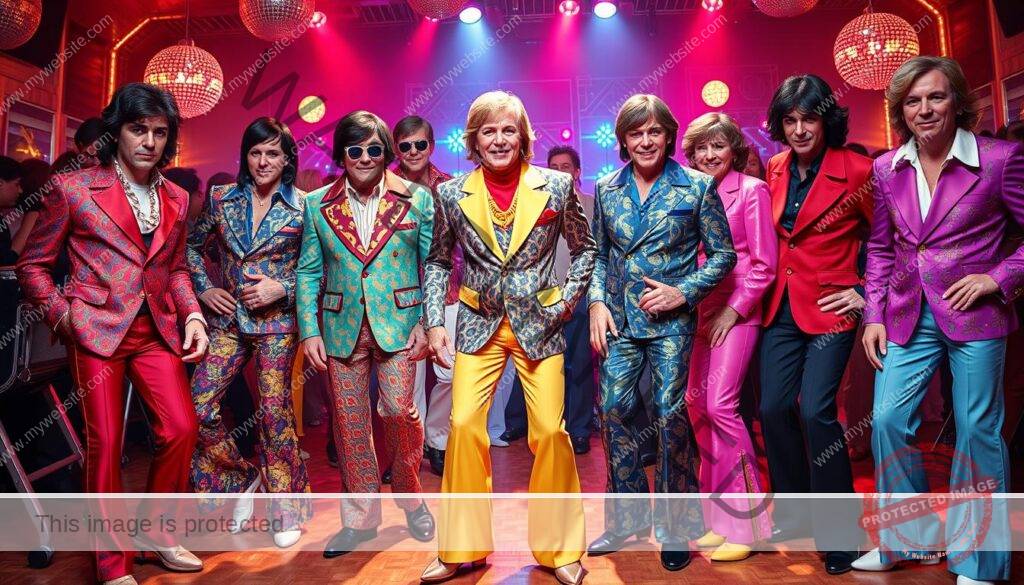
The leisure suit’s lasting charm shows the disco era’s lasting influence. It perfectly mixed style and practicality. This makes it a timeless fashion icon that still inspires today.
Platform Shoes: Adding Height and Drama
No discussion of disco fashion is complete without platform shoes. These shoes added height and drama to outfits. They were made in leather or suede, in many colors and finishes, like metallic and patent leather.
Designers like Salvatore Ferragamo and brands like Gucci made stylish and danceable platform shoes. The trend was big in the early 1970s. It was loved by young people in Europe, Australia, and the U.S.
Both men and women wore platform shoes in the 1970s. This was during the Peacock Revolution, when men’s fashion got more flamboyant. Kork-Ease, known for comfort, sold out its high platform wedges across the country.
The platform shoe trend shifted towards the 1980s’ preppy/sporty look. But, ’70s retro style is still big in contemporary fashion.
The 1970s were a big time for style. Footwear and accessories were bold and key to outfits. Today, 70s fashion trends are back, loved by celebrities and designers. Designers from the 70s created pieces that are still loved today.
70’s disco era fashion: Bold Colors and Patterns
The 1970s disco era was all about bold fashion and self-expression. Disco fashion was known for its bright colors and psychedelic prints. These styles showed the era’s love for freedom and creativity.
From Studio 54 to everyday fashion, bold colors and patterns were everywhere. They made a statement and showed off personal style.
Vibrant Hues and Psychedelic Prints
Disco fashion loved color. Electric blues, fiery reds, and shimmering golds were everywhere. People wore these colors to show their energy and individuality.
Psychedelic prints added fun and whimsy to outfits. These prints, inspired by the counterculture, had swirling patterns. They captured the era’s playful spirit.
Metallic Finishes and Sequins
Disco fashion was all about glamour. Metallic fabrics and sequins were big, adding sparkle and drama. These materials made dancers shine under the disco lights, feeling like stars.
| Key Disco Fashion Trends | Description |
|---|---|
| Bell-Bottom Pants | Wide flares at the bottom, bell-bottom pants were a disco staple. They let people show off their style. |
| Disco Jumpsuits | Stretchy jumpsuits were a hit for dancers. They were made of spandex or polyester and stood out on the dance floor. |
| Wrap Dresses | Flowy wrap dresses were great for day or night. Made of jersey or chiffon, they were versatile and chic. |
| Platform Shoes | Men and women wore platform shoes in disco fashion. They were often glittery or metallic, adding glamour. |
« Disco fashion allowed people to express their individuality and embrace their true selves. The bold colors, patterns, and shimmering fabrics were a form of self-expression and celebration. »
Disco fashion was more than just clothes. It was a cultural movement of self-expression and empowerment. The era’s fashion, with its bright colors and metallic finishes, still inspires today. It shows the power of being bold and different.
Hairstyles and Grooming in the Disco Era
The disco era brought bold and expressive hairstyles and grooming trends. Disco fashion took over the dance floors. At the same time, people started to embrace a more relaxed and personal style.
The Iconic Afro
The afro was a big hit in the disco era. It was especially popular among African-Americans as a symbol of pride and identity. Long, picked-out afros became a defining look, showing off natural textured hair.
Facial Hair and Sideburns
Facial hair was also big in the disco era. Mustaches, beards, and sideburns were all the rage. Iconic figures like Tom Selleck and Burt Reynolds set the trend, showing off individuality.
| Hairstyle Trend | Iconic Figures |
|---|---|
| Feathered Hair | Farrah Fawcett, Robert Redford, John Travolta |
| Shag Hairstyle | Mick Jagger, David Bowie, David Cassidy, Paul McCartney |
| Afro | Julius Erving, Billy Preston |
| Curly Hair | Art Garfunkel, Bob Dylan, Gene Wilder |
| Mustache | Tom Selleck, Burt Reynolds |
| Beard | George Lucas |
| Sideburns | Elvis Presley |
The disco era celebrated diverse hairstyles and grooming trends. This reflected a cultural shift towards individuality and self-expression. These iconic looks still inspire fashion and beauty today, showing the lasting impact of the disco era.
Disco Fashion Icons
The 1970s disco era changed music and fashion forever. John Travolta and the Bee Gees were at the heart of this style.
John Travolta: Saturday Night Fever’s Style Sensation
In Saturday Night Fever, John Travolta became a disco fashion icon. He wore a white polyester suit, black shirt, and high platform shoes. His character’s style was bold and glamorous, inspiring many to follow the disco fashion influence.
The Bee Gees: Musical and Fashion Trendsetters
The Bee Gees were musical and fashion leaders of the disco era. Their music and style, with tight pants and layered jewelry, matched the John Travolta look. They blended music and fashion perfectly.
The Bee Gees and disco fashion icons like Travolta’s character in Saturday Night Fever left a lasting impact. They inspired future generations with their bold and glamorous style.
Afrocentric Influences on Disco Fashion
The 1970s disco era was a time of vibrant fashion. It celebrated African heritage and cultural expression. Afrocentric styles, with bold colors and unique shapes, showed the pride of the Black community.
Celebrating African Heritage
Dashikis, with their bright colors and designs, were a key part of disco fashion. These shirts connected people to their roots and celebrated cultural identity. Kaftans, long robes, also became popular, showing off African textile arts.
The Afro hairstyle was a big trend in the disco era. It highlighted African American culture’s influence on fashion. This hairstyle was a powerful way to express pride and challenge societal norms.
Dashikis and Kaftans: Traditional Garments
Dashikis and kaftans were more than clothes; they celebrated African heritage. They had vibrant colors, patterns, and comfortable fits. These garments let people connect with their roots and show pride in their culture.
Afrocentric fashion in the disco era was more than just a trend. It was a statement of empowerment. It challenged norms and celebrated the beauty and diversity of Black culture. This influence still shapes fashion today, leaving a lasting impact on style and identity.
Disco Glamour: Shimmering Fabrics and Bold Silhouettes
The 1970s disco era was all about glamour. Fashion dazzled with shimmering fabrics and bold shapes. Disco fashion was bold, led by stars like Donna Summer and Diana Ross.
Sequins, satin, and metallics were key in disco style. They matched the bright lights of clubs like Studio 54. These materials made wearers shine on the dance floor.
Bold colors like gold, silver, and electric blue were key. Unisex fashion was big, with both men and women wearing flamboyant styles and exaggerated silhouettes. This showed confidence and extravagance.
| Iconic Disco Venues | Legendary Disco Songs | Trendy 70s Disco Cocktails |
|---|---|---|
| Studio 54 (New York) | « Stayin’ Alive » by Bee Gees | Harvey Wallbanger |
| The Loft (New York) | « I Will Survive » by Gloria Gaynor | Tequila Sunrise |
| The Embassy Club (London) | « Le Freak » by Chic | Tom Collins |
The disco style let people show their true selves. It was all about being bold and celebrating life. Disco’s glamour from the 1970s still inspires fashion today.
The Cultural Significance of Disco Fashion
The 1970s disco era was a time of big change. Disco fashion became a way for people, especially in the Black community, to express themselves and feel empowered. It started in New York City’s underground dance parties. These parties were where people could celebrate their identity and heritage.
Expression of Identity and Empowerment
Disco fashion let people show off their unique style and African heritage. They used bright colors, bold patterns, and fancy fabrics like satin and sequins. The iconic Afro hairstyle, for example, was a sign of Black pride and a way to resist societal norms.
Fashion as Resistance and Unity
Disco fashion was also a way to fight against oppression and bring people together. By embracing their cultural roots and rejecting mainstream fashion, people found strength and a sense of belonging. Disco celebrated diversity, challenged norms, and promoted unity and solidarity.
The impact of disco fashion is huge. It was more than just a fashion trend. It was a powerful way to express oneself, challenge society, and unite people. Disco’s influence still shapes fashion, music, and culture today, showing its lasting effect.
« Disco was a movement that centered Black, Brown, and Queer people, providing a safe space for them to express themselves through music, dance, and fashion. It was a defiant celebration of identity and a rejection of societal norms. »
Conclusion
The 70s disco fashion legacy still inspires many today. Designers and artists around the world draw from its bold styles. Afrocentric prints, bright colors, and flashy shapes are back in fashion.
This revival keeps the disco era’s spirit alive. It celebrates African heritage and the creativity of black communities. Disco fashion is more than just clothes; it’s a symbol of pride and resilience.
Modern fashion often includes elements from the 70s. Many designers find inspiration in the era’s vibrant style. This shows disco fashion’s lasting impact on today’s trends.
The demand for eco-friendly fashion inspired by disco is growing. This shift towards sustainable choices helps preserve the era’s iconic style. It shows disco fashion’s influence on our current fashion choices.
Disco fashion remains a big part of popular culture. It’s seen in music videos, films, and on the red carpet. The rise in vintage sales of 70s disco items also shows its lasting appeal.
As disco fashion continues to shape today’s style, it proves the power of cultural expression. It celebrates the spirit of the 70s and its lasting influence on fashion.